

NOTE: The following topic number, ARM26BX04-DV010 – Ground-Based Affordable Mass (G-BAM), in this release is tied to a Defense Innovation Unit (DIU) Challenge Commercial Solutions Openings. The DIU G-BAM Challenge will be used to identify small business concerns that meet the criteria for a potential SBIR Direct-to-Phase II (DP2) award under this topic. Finalists and final winners selected from the DIU G-BAM Challenge will be the only firms eligible to submit an SBIR DP2 proposal under this topic. Proposals submitted to this topic by non-finalists of the DIU G-BAM Challenge will not be evaluated.
NOTE: The topic ARM26BX04-DV010 – Ground-Based Affordable Mass (G-BAM), was modified on 21 July 2026 in alignment with the DIU Open Solicitation.
How to Apply: Visit the DIU Open Solicitations page to read the full Challenge Announcement, topic details, and application instructions here:
https://www.diu.mil/work-with-us/submit-solution/PROJ00672
July 21 2026: White paper submission window opens via link above
August 05 2026 at 23:59:59 US/Eastern Time ET: Response deadline via link above
DIU Challenge applications are NOT submitted to DSIP. Small business concerns that do not submit an application through the DIU Open Solicitations page (https://www.diu.mil/work-with-us/submit-solution/PROJ00672) before the deadline will be ineligible to compete or submit a full SBIR proposal to DSIP. The DSIP proposal submission window tied to this topic is for the finalists and final winners of the competition only.
Objective
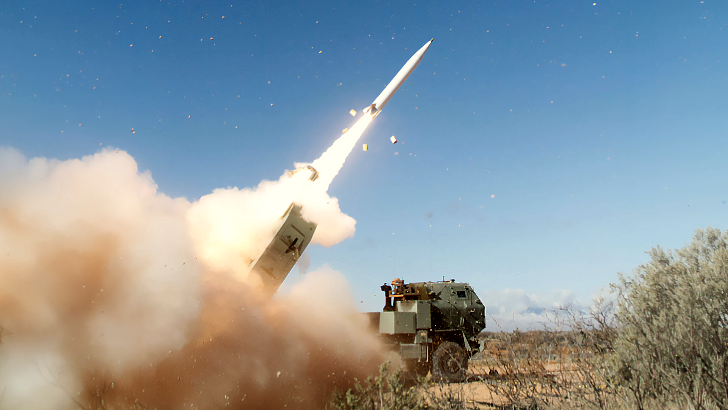
The United States currently faces an “unprecedented” military buildup by China and increasing air and missile threats that demand a robust deterrent. However, the current inventory of long-range strike weapons is dominated by high-cost, low-volume systems or aging strategic assets like the Minuteman III, which dates back to the 1960s. The lack of a cost-effective, ground-launched payload delivery system prevents the Joint Force from achieving producibility at scale, leaving the U.S. vulnerable in high-intensity, multi-domain environments where high-end munitions would be rapidly depleted. The objective of this topic is to facilitate innovative research on low-cost, rapidly manufacturable, payload delivery systems.
Description
The Department of War (DoW) is pivotally shifting toward “affordable mass” to counter peer adversaries who are rapidly expanding their military capabilities. While hypersonic systems offer high speeds, their exorbitant costs—exceeding $50 million per round—limit the military’s ability to achieve the “magazine depth” necessary for prolonged conflict. This project proposes a ground-based, non-hypersonic, long-range precision payload delivery system that leverages low-cost production methods and commercial technologies to provide a scalable, high-volume alternative that is a tenth of the price of current high-end munitions.
Phase I
This topic is accepting Direct to Phase II submissions for a cost limit up to $2,000,000 and an 12–18-month period of performance.
Phase II
This topic is a DP2 topic. In order for proposers to submit a DP2 proposal, they must provide justification documentation to substantiate that the scientific and technical merit and feasibility described above has been met and describes the potential military and/or commercial applications. Documentation should include all relevant information including, but not limited to: technical reports, test data, prototype designs/models, and performance goals/results. The results from the DIU G-BAM Challenge demonstration event will be used to determine eligibility for DP2.
Prototype capabilities sought include:
Phase III
PHASE III DUAL USE APPLICATIONS: The sub-system technologies developed for low-cost, long-range payload delivery have significant applications in the civilian/commercial aerospace and logistics sectors. The artificial intelligence (AI) and autonomous navigation systems required for these munitions can be adapted for commercial cargo delivery drones and autonomous maritime vessels. Additionally, the push for additive manufacturing and rapid prototyping in the Indo-Pacific region to support these systems can revitalize domestic high-tech manufacturing, providing private companies with advanced production techniques that reduce costs for civilian infrastructure projects. Additionally, this space lends itself to the potential for development of low-cost alternate fuel technologies. Companies participating in the shoot-off are encouraged to propose tech development for manufacturing methods materials/guidance/seekers/alt propulsion, etc. to enhance their products. These are the primary opportunities for commercialization.
Submission information
For more information, Contact DIU at https://www.diu.mil/work-with-us/submit-solution/PROJ00672
For questions related to the Army FUZE SBIR|STTR, contact SBIR|STTR Help Desk: usarmy.sbirsttr@army.mil
References:
NOTE: The following topic number, ARM26BX04-DV010 – Ground-Based Affordable Mass (G-BAM), in this release is tied to a Defense Innovation Unit (DIU) Challenge Commercial Solutions Openings. The DIU G-BAM Challenge will be used to identify small business concerns that meet the criteria for a potential SBIR Direct-to-Phase II (DP2) award under this topic. Finalists and final winners selected from the DIU G-BAM Challenge will be the only firms eligible to submit an SBIR DP2 proposal under this topic. Proposals submitted to this topic by non-finalists of the DIU G-BAM Challenge will not be evaluated.
NOTE: The topic ARM26BX04-DV010 – Ground-Based Affordable Mass (G-BAM), was modified on 21 July 2026 in alignment with the DIU Open Solicitation.
How to Apply: Visit the DIU Open Solicitations page to read the full Challenge Announcement, topic details, and application instructions here:
https://www.diu.mil/work-with-us/submit-solution/PROJ00672
July 21 2026: White paper submission window opens via link above
August 05 2026 at 23:59:59 US/Eastern Time ET: Response deadline via link above
DIU Challenge applications are NOT submitted to DSIP. Small business concerns that do not submit an application through the DIU Open Solicitations page (https://www.diu.mil/work-with-us/submit-solution/PROJ00672) before the deadline will be ineligible to compete or submit a full SBIR proposal to DSIP. The DSIP proposal submission window tied to this topic is for the finalists and final winners of the competition only.
Objective
The United States currently faces an “unprecedented” military buildup by China and increasing air and missile threats that demand a robust deterrent. However, the current inventory of long-range strike weapons is dominated by high-cost, low-volume systems or aging strategic assets like the Minuteman III, which dates back to the 1960s. The lack of a cost-effective, ground-launched payload delivery system prevents the Joint Force from achieving producibility at scale, leaving the U.S. vulnerable in high-intensity, multi-domain environments where high-end munitions would be rapidly depleted. The objective of this topic is to facilitate innovative research on low-cost, rapidly manufacturable, payload delivery systems.
Description
The Department of War (DoW) is pivotally shifting toward “affordable mass” to counter peer adversaries who are rapidly expanding their military capabilities. While hypersonic systems offer high speeds, their exorbitant costs—exceeding $50 million per round—limit the military’s ability to achieve the “magazine depth” necessary for prolonged conflict. This project proposes a ground-based, non-hypersonic, long-range precision payload delivery system that leverages low-cost production methods and commercial technologies to provide a scalable, high-volume alternative that is a tenth of the price of current high-end munitions.
Phase I
This topic is accepting Direct to Phase II submissions for a cost limit up to $2,000,000 and an 12–18-month period of performance.
Phase II
This topic is a DP2 topic. In order for proposers to submit a DP2 proposal, they must provide justification documentation to substantiate that the scientific and technical merit and feasibility described above has been met and describes the potential military and/or commercial applications. Documentation should include all relevant information including, but not limited to: technical reports, test data, prototype designs/models, and performance goals/results. The results from the DIU G-BAM Challenge demonstration event will be used to determine eligibility for DP2.
Prototype capabilities sought include:
Phase III
PHASE III DUAL USE APPLICATIONS: The sub-system technologies developed for low-cost, long-range payload delivery have significant applications in the civilian/commercial aerospace and logistics sectors. The artificial intelligence (AI) and autonomous navigation systems required for these munitions can be adapted for commercial cargo delivery drones and autonomous maritime vessels. Additionally, the push for additive manufacturing and rapid prototyping in the Indo-Pacific region to support these systems can revitalize domestic high-tech manufacturing, providing private companies with advanced production techniques that reduce costs for civilian infrastructure projects. Additionally, this space lends itself to the potential for development of low-cost alternate fuel technologies. Companies participating in the shoot-off are encouraged to propose tech development for manufacturing methods materials/guidance/seekers/alt propulsion, etc. to enhance their products. These are the primary opportunities for commercialization.
Submission information
For more information, Contact DIU at https://www.diu.mil/work-with-us/submit-solution/PROJ00672
For questions related to the Army FUZE SBIR|STTR, contact SBIR|STTR Help Desk: usarmy.sbirsttr@army.mil
References: