

This platform will integrate tools and best practices in a central portal to modernize the Army’s acquisition process, supporting both Business-to-Business (B2B) and Business-to-Consumer (B2C) needs
AI-enabled Portfolio Management Read More »
supply chain management, logistics coordination, target identifications and simulation
This platform will integrate tools and best practices in a central portal to modernize the Army’s acquisition process, supporting both Business-to-Business (B2B) and Business-to-Consumer (B2C) needs
AI-enabled Portfolio Management Read More »
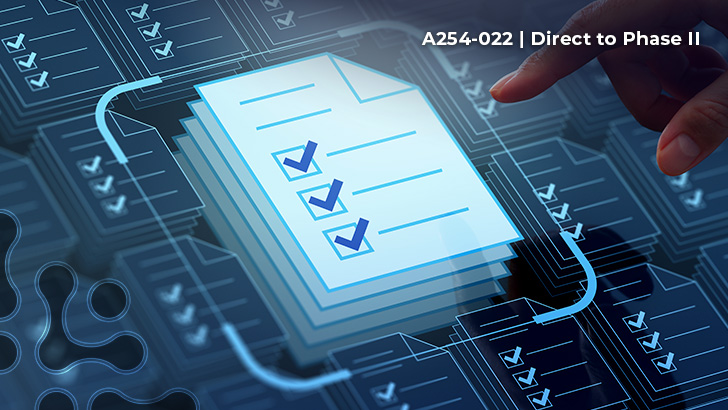
Provide a comprehensive software-as-a-service (SaaS) solution that automates and standardizes the evaluation and source selection processes while tailoring the user experience to the Army’s unique conditions/constraints.
AI Enabled Source Selection Solution for Contract Proposal Evaluation Read More »

Develop and integrate Artificial Intelligence (AI) technology that can augment current and future sensor hardware enhancing the ability of the driver to maneuver and operate large, heavy, ground combat vehicles.
Artificial Intelligence for Aided Driving of Ground Combat Vehicles Read More »
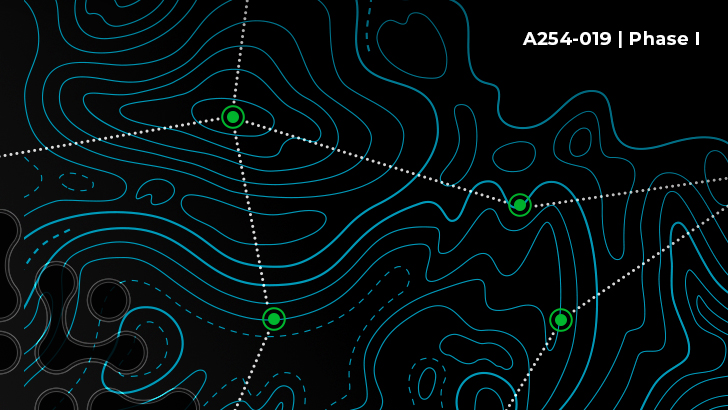
The objective of this topic is to create a realistic modeling and simulation environment using Generative AI for NGC2, the Army’s new approach to a data-centric C2 architecture.
Generative AI Enabled Tactical Network Read More »

Organizations across various sectors are increasingly inundated with vast amounts of data, making it challenging to identify and analyze anomalies and patterns effectively.
Novel AI Techniques for Insights in Various Environments (NATIVE) Read More »
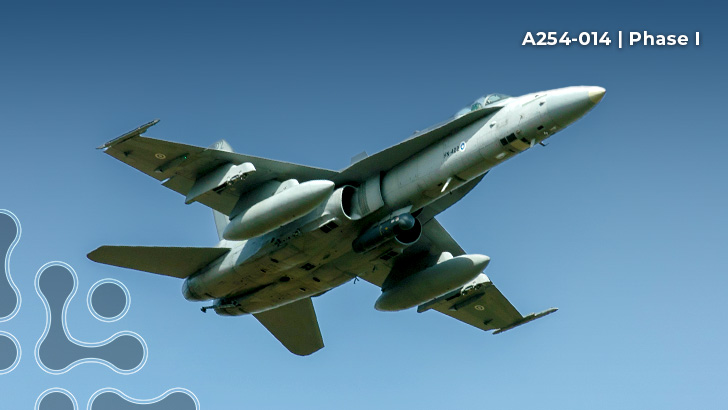
Development of cognitive decision aiding logic, utilizing machine learning and artificial intelligence constructs, to assist aviators in safely performing tactical flight very close to terrain.
Cognitive Terrain Flight Assistance Read More »
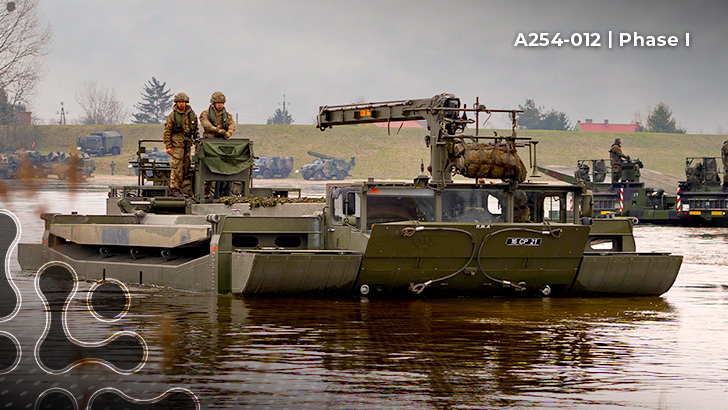
This topic seeks to develop autonomous drone swarm capability for watercraft operated in a riverine environment. The fielding of autonomous powered floating bridges will enable the Army to conduct unpredictable dispersed river crossings, increase crew survivability by removing the man from the craft, and reduce logistics footprint over the Improved Ribbon Bridge in use today by combining both payload capacity and powertrain into a single craft. The development of an autonomy package for multiple dispersed floating bays to interact separately and jointly is the key technology to bring this capability to the 2040 battlespace.
Autonomous Robotic Bridging Read More »
The objective of this topic is to apply Large Language Models (LLMs) and/or other Artificial Intelligence (AI) approaches to support and automate warfighter’s system’s integrations. This will pertain to problems with data unification and interoperability regardless of the target system, source system, or data format. It will focus on usage in tactical environments to assist and provide reliable performance, regardless of echelon level.
Artificial Intelligence for Interoperability Read More »

Operating, maneuvering, engaging, defending, and commanding the Combat Vehicles on the modern battlefield requires a significant level of crew communication, systems management, and situational awareness.
AI/ML-Enabled Voice-Commanded Autonomous Maneuver for Ground Combat Vehicles Read More »

Automated Course of Action (CoA) recommendation at the Unit of Action. Currently, it takes units at the Battalion (BN) echelon several hours to use the Military Decision-Making Process (MDMP) to generate and vet CoA options.
Leveraging state-of-the-art Artificial Intelligence/Machine Learning (AI/ML) algorithms will speed up this process by an order of magnitude, allowing systematic replanning during the execution phase of operations. This will improve mission success and reduce risk to force in combat operations. It will also enable the mobile, distributed command post concept.
Automated Course of Action Generation Read More »